China is a major sourcing base for Door Hardware, from cabinet pulls and hinges to door closers and digital locks. For global buyers, the challenge is not simply finding a long supplier list. It is identifying manufacturers whose products suit the project, installation conditions, and target market. A handle that looks flawless in a catalog may feel loose after repeated use. Small details matter.
This guide examines how buyers can compare Chinese manufacturers with greater confidence. It considers product range, material options, finish consistency, production capacity, quality-control practices, and communication. A useful supplier should explain specifications clearly, provide samples when appropriate, and answer practical questions about dimensions, packaging, lead times, and after-sales support. Ask for current test reports or certifications where relevant, then confirm that they apply to the exact product and destination market. Requirements can differ.
Price deserves attention, but it should sit beside durability and service. A low quote can still be the wrong choice. I would not treat a polished website, quick reply, or impressive factory video as proof of dependable production. Request clear drawings, inspect sample hardware, and confirm what happens when a batch fails inspection. No checklist removes every risk. Even careful buyers can overlook a detail, such as finish variation between product lines. The sections ahead offer a practical framework for assessing manufacturers, comparing evidence, and choosing a partner whose capabilities match real project needs.
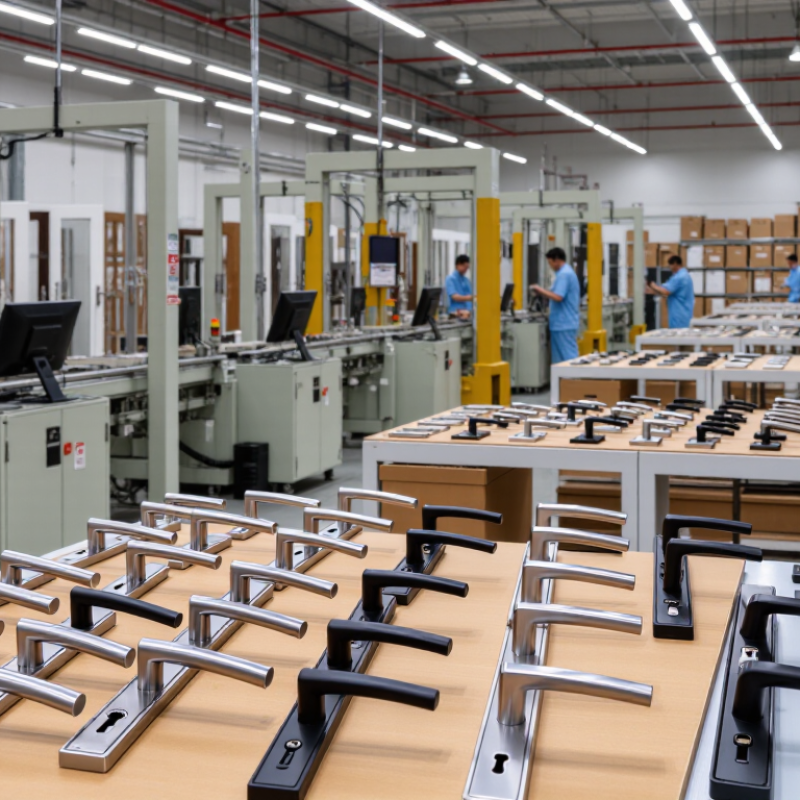
China’s door hardware sector serves residential, commercial, and industrial projects through a broad mix of components. Common categories include hinges, lever handles, lock bodies, cylinders, door closers, and pull handles. Some factories focus on a narrow product range, while others coordinate several parts for a complete door set. Materials vary, too: stainless steel, brass, zinc alloys, and different grades of steel suit different uses and budgets.
Small details matter. Buyers often compare dimensions, surface finish, operating cycles, and packaging before placing repeat orders. A sample can reveal rough edges, loose handle movement, or a coating that looks uneven under bright light. These checks help, but a sample alone cannot confirm that every production batch will match it.
The export supply chain commonly links material suppliers, machining or stamping workshops, finishing lines, assembly teams, inspection, and freight providers. Products may be packed individually, grouped into kits, or labeled to match a buyer’s order system. Clear drawings and written tolerances reduce avoidable changes during production. The picture is not always tidy: catalogs may blur the difference between standard stock and custom work. Buyers should confirm lead times, carton details, inspection records, and who handles questions when specifications change.
Representative product types commonly considered by global buyers, grouped around HS headings 8301 (locks) and 8302 (base-metal fittings). Bar values count only the examples listed here; they are not export volumes, market shares, or a complete product census.
Export supply chain: product specification and compliance checks → supplier sampling and quotation → production and quality inspection → export documentation and customs clearance → freight and delivery. Requirements and lead times vary by product, destination, and shipping method.
For global buyers, a useful hardware specification begins with the door’s environment and daily use. Match material to exposure, not appearance alone. Stainless steel is often considered for damp or coastal settings, while brass can suit interiors where its warmer tone is desired. Confirm the grade and construction with the supplier; material names alone do not tell the whole story.
Finish affects both appearance and upkeep. Ask how a finish performs with frequent handling, cleaning, and humidity, then request a physical sample to compare against the door. Looks matter. A small sample can reveal a color mismatch that product photos hide. Specify function just as carefully: a passage lever, privacy lock, entrance lock, and exit device serve different needs. Check the handing, spindle, backset, and lock compatibility before ordering.
Door type changes the requirements. A solid timber door, a narrow-framed glass door, and a metal entrance door may need different fixings and hardware dimensions. Include door thickness, material, weight, and any existing preparation in the schedule. Small gaps matter. One easy-to-miss detail is closer strength: a unit that is too strong can make a door difficult to open, while one that is too weak may not control it reliably. Request drawings, installation guidance, and relevant test documentation for the specified door assembly.
For global buyers, an EN 1906 durability rating is more useful than a vague “heavy-duty” claim. Under EN 1906:2012, Grade 7 corresponds to 200,000 operating cycles; Grade 6 corresponds to 100,000. The European Committee for Standardization’s classification gives buyers a common basis for comparing door furniture. The number matters. Ask for the test report, model reference, and tested configuration—not just a catalogue line.
A cycle count is a laboratory result, not a guaranteed service life. A handle on a busy school corridor door may face harder use than one in a private office. Door weight, installation alignment, user force, and maintenance all affect performance. Look closely at the test conditions. Were the actual lever, spindle, and lock arrangement tested together? That detail is easy to miss. Even a Grade 7 product can wear early if a door binds or fixings loosen. I would treat 200,000 cycles as strong comparative evidence, not a promise that every installed set will reach the same point. Keep the EN 1906 report with procurement records, and check that the delivered hardware matches its tested configuration.
For global buyers, a manufacturer’s test report is only a starting point. Ask which tests match the hardware’s intended use, such as repeated handle operation, load resistance, or finish durability. Check the test method, sample size, date, and acceptance limits. A report should identify the tested product clearly. A polished report is not proof by itself.
Look beyond the test room. A reliable quality system tracks incoming materials, production checks, and final inspections. Ask how the factory records batch numbers, calibrates measuring tools, and handles failed parts. Request sample inspection records, not just a quality certificate. That matters. During a busy production changeover, a small detail can still be missed, so ask how corrective actions are verified.
Customization also needs measurable controls. Share drawings that specify dimensions, tolerances, materials, finish, and fixing points. Then compare the approved sample with the production specification. A finish can look different under showroom lighting. Request samples under neutral light, and confirm packaging protects edges and moving parts. Discuss tooling costs, minimum quantities, and lead times before approval. Keep one unresolved question visible: how will changes be documented after the first order?
For global buyers, door hardware comparisons should begin with evidence, not a broad “compliant” claim. Ask for test reports that match the exact product, material, and finish you plan to order. A report for a similar lever may not cover your chosen lockset. Check whether the testing addresses the destination market’s stated requirements, and confirm report dates and model numbers. Details matter.
Minimum order quantities can apply per finish, function, or packaging configuration, not just per product family. Request a written breakdown before paying for samples. For a first order, compare the cost of a smaller trial batch against the risk of holding slow-moving stock. One catch: suppliers may quote different configurations, making a simple price comparison misleading. Clarify what is included.
Lead times need the same care. Ask when the clock starts: after deposit, drawing approval, or final sample sign-off. Get separate estimates for production and shipping, plus an update schedule for delays. Then calculate landed cost per usable unit, including freight, insurance, duties, brokerage, packaging, and inspection. A low factory price can shrink quickly. Keep the assumptions beside each quote; estimates change, and buyers sometimes overlook that.
Common products include hinges, lever handles, lock bodies, cylinders, door closers, and pull handles. Materials include stainless steel, brass, zinc alloys, and steel.
Check dimensions, finish, handle movement, and visible edges. Look under bright light for uneven coating. Samples help, but batches may differ.
Grade 7 corresponds to 200,000 operating cycles. Grade 6 corresponds to 100,000 cycles. These are test results, not service-life promises.
Request the test report, model reference, and tested configuration. Confirm that the lever, spindle, and lock arrangement match the product ordered. Details matter.
Door weight, alignment, user force, and maintenance can all affect performance. A binding door or loose fixings may cause early wear. Not always obvious.
Match reports to the exact product, material, and finish. Check model numbers, report dates, and destination requirements. A similar model may not be enough.
Ask whether minimums apply by finish, function, or packaging. Confirm when production time begins and request separate production and shipping estimates.
Calculate landed cost per usable unit, including freight, insurance, duties, brokerage, packaging, and inspection. Keep quote assumptions together; estimates can change. I may be cautious here.
China’s Door Hardware sector serves global buyers through a broad export supply chain covering products such as handles, hinges, locks, and other fittings. Choosing the right products starts with clear specifications: match materials and finishes to the project’s appearance and environment, and select functions suited to the door type and intended use. For lever handles, EN 1906 ratings offer a way to compare performance; Grade 7 indicates a durability requirement of 200,000 cycles.
A thorough supplier assessment should consider testing capability, quality management, and the ability to customize dimensions, finishes, or packaging. Buyers should also compare applicable compliance documentation, minimum order quantities, production and shipping lead times, and the full landed cost—not just the unit price. Evaluating these factors together helps create realistic expectations, reduce sourcing surprises, and identify products and manufacturing partners that fit the project’s technical and commercial needs.