Choosing Cabinet Hardware can feel like a small decision until a drawer sticks or a finish clashes with the room. The right knobs and pulls should look considered, feel comfortable, and hold up to daily use. A brushed brass pull, for example, may soften a white kitchen, while a broad bar handle can make heavy drawers easier to open. Style matters, but so do material, finish quality, installation, and price.
This guide explores ten cabinet hardware brands and the features that set them apart. It considers design range, common materials, finish options, ease of fitting, and the kind of details shoppers can verify before buying. A solid feel helps. So does clear product information. Brand reputation can be useful, but it cannot guarantee that every collection suits every home or budget. Even careful comparisons have limits: photographs can distort color, and a finish sample may look different under warm kitchen lights. Small details matter.
Use the brand profiles as a starting point, then compare specific products against your cabinets, room conditions, and habits. Check measurements, mounting-hole spacing, care instructions, and warranty terms directly with the manufacturer or retailer. If possible, handle a sample before ordering a full set. It takes extra time. Yet a pull that feels comfortable in your hand may matter more than a striking product photo. The best choice is not always the most expensive or most popular; it is the one that balances appearance, function, and lasting value in your space.
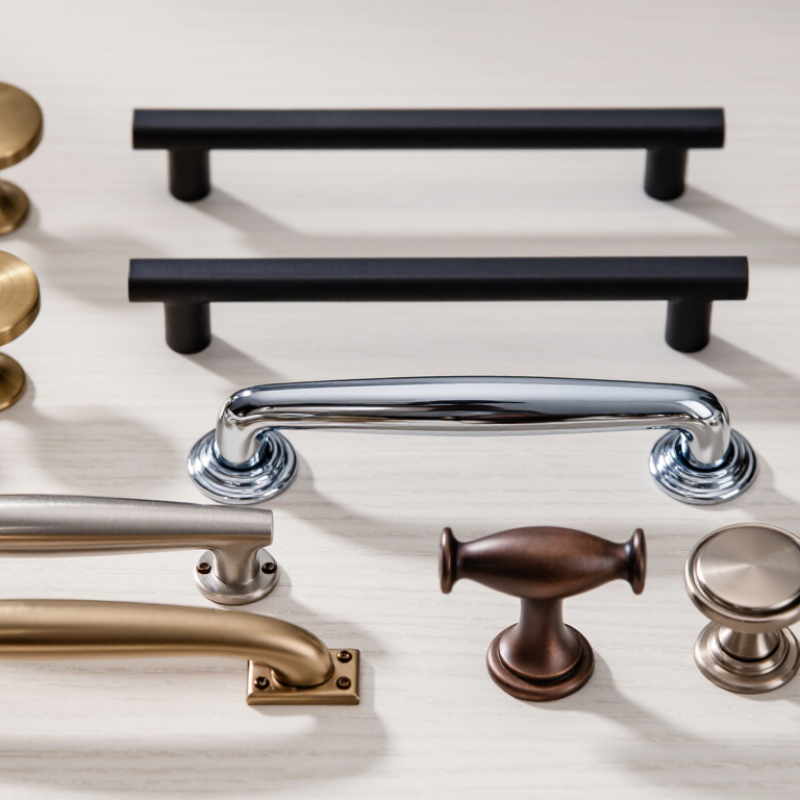
A credible comparison starts with the hardware in hand, not the product photos. We assess finish consistency, edge quality, grip, and how securely each pull or knob mounts. Small details matter. A sharp edge or loose screw can become irritating after hundreds of daily openings. We also check whether common screw spacing and clear installation instructions make replacement practical.
Durability deserves real weight. Houzz’s 2024 U.S. Kitchen Trends Study reported a $55,000 median spend for major kitchen remodels completed in 2023, a 22% rise from 2022. That figure covers the renovation, not hardware alone, but it shows why buyers should expect components to last. We compare materials, finish resistance, warranty terms, and access to replacement parts. Where technical documentation is available, we look for testing against ANSI/BHMA A156.9, the cabinet hardware performance standard. Claims without test details receive less credit.
We judge value by more than the lowest price. A comfortable grip, consistent finish, and reliable mounting can matter more than decorative extras. We note installation problems and differences between listed specifications and the physical sample. One limitation: short-term inspection cannot predict years of wear. Even careful ratings involve judgment.
A useful cabinet-hardware profile looks beyond appearance. It asks how a pull feels, how its finish wears, and whether replacement parts remain available. The NKBA’s 2024 Kitchen Trends Report found that 76% of surveyed professionals expected transitional design to remain popular. That context favors hardware that bridges classic shapes and cleaner lines, but it does not prove one style suits every home.
Ten notable maker profiles can be distinguished by their strengths.
Details matter. Compare screw spacing before ordering; a mismatch can leave old holes exposed. Ask about finish-care instructions and warranty coverage, not just the showroom sample. Some polished surfaces show fingerprints quickly. I would not treat a popular finish as a reliable measure of durability. Builders’ specifications, product documentation, and repeated hands-on use offer stronger evidence, though even those can miss how hardware feels after years of daily use.
Across leading cabinet-hardware makers, material choice often separates a sturdy pull from a merely attractive one. Solid brass offers substantial weight and can suit frequently used kitchen drawers. Stainless steel is practical in busy spaces because it resists everyday moisture and cleans easily. Zinc alloy allows detailed shapes at a lower cost, but quality and durability vary. Weight helps, but it is not proof of quality. Check the construction and mounting hardware, too.
Finishes shape both appearance and maintenance. Brushed nickel and satin brass soften fingerprints, while polished chrome shows them more readily. Matte black creates a crisp contrast against pale cabinets, though scratches may stand out. Small details matter. Style also affects how a room feels: slim bar pulls look contemporary, while rounded knobs or backplates can suggest a more traditional look. Not always. A simple pull can bridge both styles when its proportions suit the cabinet doors.
Compare samples beside your actual cabinetry and under the room’s lighting; finish names alone can be misleading. A warm brass sample may look yellow in sunlight and muted under evening bulbs. Review the maker’s care instructions and warranty terms before choosing, especially for high-touch areas. One limitation: a sample cannot show how a finish will age after years of handling. Check several pieces in person when possible, and make sure the pull’s length feels comfortable in your hand.
Choosing cabinet hardware by budget is less about finding the cheapest pull and more about matching durability to daily use. For a rental refresh, simple knobs with a consistent finish can keep costs predictable. In a busy family kitchen, solid metal handles may better withstand repeated grabbing and cleaning. Check how each piece feels in your hand, not just how it looks online. Small detail. It matters.
For a full renovation, compare more than the price per piece. Look at finish consistency, available sizes, mounting hardware, and the supplier’s replacement policy. Order a sample when possible; a warm brass tone can look surprisingly different beside your cabinet paint. Measure existing hole spacing before buying. I have seen this step rushed, and then a tidy upgrade turns into extra drilling and patching. Annoying, but avoidable.
Custom cabinetry may justify distinctive shapes or made-to-order finishes, while a quick update often works better with standard sizes that are easy to replace. Ask whether screws are included and whether the finish has care instructions. If you are outfitting several rooms, calculate the total quantity and keep a few spare pieces from the same batch. Perfect matching is not guaranteed across production runs, even when the finish name stays the same.
| No. | Hardware Profile | Typical U.S. Price per Piece | Common Materials and Finishes | Best Project Fit | Practical Considerations |
|---|---|---|---|---|---|
| 1 | Basic bar pulls | $2–$8 | Zinc alloy or steel; commonly brushed nickel, matte black, or chrome | Rental refreshes, utility rooms, and large cabinet runs on a tight budget | Simple shapes are easy to clean and replace. Check screw length and center-to-center spacing before ordering. |
| 2 | Classic knobs | $2–$10 | Zinc alloy, steel, or ceramic; finishes include polished nickel, brass tones, and painted colors | Traditional kitchens, bathroom vanities, and budget-friendly cabinet updates | Knobs usually require one mounting hole, making them a straightforward option when reusing existing doors. |
| 3 | Stainless-steel pulls | $5–$20 | Stainless steel; brushed, satin, or polished surfaces | Contemporary kitchens, busy family homes, and areas where frequent cleaning is expected | Stainless steel is generally corrosion-resistant. Match the finish across pulls, faucets, and appliances for a coordinated look. |
| 4 | Solid-brass hardware | $12–$45 | Solid brass; unlacquered, polished, satin, or aged finishes | High-use kitchens, long-term renovations, and projects that prioritize durable materials | Unlacquered brass can develop a natural patina; lacquered finishes tend to retain a more uniform appearance. |
| 5 | Heritage-style cup pulls and bin pulls | $6–$25 | Steel, zinc alloy, or brass; often offered in aged or dark finishes | Farmhouse, cottage, and traditional cabinetry, especially on drawers | These pulls are typically installed with two screws. Confirm the mounting-hole spacing and allow room for fingers beneath the cup. |
| 6 | Minimalist edge pulls | $8–$35 | Aluminum or stainless steel; brushed metal, black, or bronze-tone finishes | Flat-front cabinets, modern interiors, and designs that favor a low-profile look | Installation style varies: some models mount to the cabinet edge while others attach to the front. Check door thickness and clearance. |
| 7 | Decorative glass or crystal knobs | $5–$30 | Glass or crystal with metal mounting hardware; clear, colored, or faceted designs | Accent cabinets, furniture projects, and vintage-inspired rooms | These finishes add visual detail but may show fingerprints or require more careful handling than plain metal hardware. |
| 8 | Hand-finished artisan-style pulls | $20–$80 | Cast brass, bronze, or iron; often hand-applied or intentionally varied finishes | Custom cabinetry, statement islands, and projects where hardware is a visible design feature | Subtle finish and shape variations may be part of the design. Order enough pieces from the same production lot when possible. |
| 9 | Oversized appliance pulls | $25–$100+ | Stainless steel, brass, or plated metal; commonly brushed or polished finishes | Integrated refrigerators, panel-ready appliances, and large pantry doors | Check the pull’s length, projection, mounting hardware, and load rating; appliance doors may need stronger, longer fasteners. |
| 10 | Coordinated mixed-size hardware sets | $4–$30 per piece, depending on material and quantity | Matching knobs and pulls in a shared finish, often in steel, zinc alloy, or brass | Whole-kitchen renovations, multi-room projects, and consistent cabinet updates | Sets can simplify finish matching. Verify that the package includes the sizes and screw lengths needed for each cabinet type. |
Price note: Approximate U.S. retail ranges per individual piece; prices vary by material, size, finish, quantity, and retailer. Center-to-center spacing is the distance between the two mounting-screw holes on a pull—measure existing holes before buying replacement hardware.
Cabinet hardware proves its value through repeated use, not showroom shine. Compare the base material, finish, screw design, and published test results. The 2024 U.S. Houzz & Home Study reported a median kitchen-remodel spend of $24,000 in 2023. That investment makes replaceable parts and durable finishes worth checking. Ask whether pulls and knobs are tested under ANSI/BHMA A156.9, the industry’s cabinet-hardware performance standard. Request specific test information, including corrosion resistance; “lifetime” wording alone tells you little. Small details matter.
Installation affects service life, too. Match screw length to the door or drawer thickness, and tighten carefully near painted edges. Too much force can crush a panel or strip a screw hole. A drilling template helps, but measure twice; templates can shift. For routine care, use a soft, damp cloth, then dry around the hardware’s base. Avoid abrasive pads and strong cleaners unless the finish instructions allow them. A clean-looking surface is not proof of sound construction. I would weigh clear specifications and available replacement parts more heavily than a polished product photo. The trade-off is real: a less ornate finish may show fewer fingerprints, while a detailed shape can take longer to clean.
Common center-to-center measurements for cabinet pulls, shown in millimeters. Confirm the spacing on your cabinets before choosing replacement hardware.
These are commonly available nominal sizes, not a ranking of brands or a guarantee that every size is available in every style. For replacement pulls, measure from the center of one screw hole to the center of the other.
Inspect finish consistency, smooth edges, grip, and secure mounting. A loose screw gets irritating fast.
Solid brass feels substantial, while stainless steel handles everyday moisture and cleaning. Zinc alloy allows detailed shapes, but quality varies.
No. Weight alone does not prove quality. Check the construction, mounting hardware, and available performance details.
Polished chrome tends to show fingerprints. Brushed nickel and satin brass can hide them better, while scratches may stand out on matte black.
Compare physical samples beside your cabinets and under your room’s lighting. A warm brass sample may look yellow in sunlight.
Measure the distance between existing screw holes. Otherwise, a simple update could require extra drilling and patching.
Standard knobs can keep a rental refresh affordable. For a busy family kitchen, sturdy metal handles may handle frequent use better.
Check available sizes, included screws, care instructions, and replacement options. Keep a few spare pieces from the same batch. Matching is not guaranteed.
This guide explains how to evaluate Cabinet Hardware by looking beyond appearance. It outlines practical criteria such as material quality, finish options, design range, price, and suitability for different spaces. It also presents ten notable types of hardware makers without relying on brand names, helping readers understand how products can vary in construction, style, and intended use. By comparing these qualities, homeowners and professionals can narrow their choices according to the look and performance they want.
The guide also considers how to match hardware to budgets and project needs, from simple updates to more involved renovations. It discusses factors that affect durability, the ease of installation, and the care needed to keep finishes looking their best over time. Together, these considerations offer a clear framework for choosing cabinet hardware that balances style, function, and long-term value.