Furniture Hardware may look like a small part of a larger product, but customers notice it every day. A drawer that opens smoothly feels dependable. A loose handle or stiff hinge can make an otherwise attractive cabinet seem poorly made. For furniture businesses, these details affect product quality, customer confidence, and the number of service requests after delivery.
Good hardware also supports efficient production. Consistent hinge dimensions, reliable slides, and suitable fasteners can help teams assemble furniture with fewer adjustments. That matters on a busy factory floor. Still, choosing hardware is not simply a matter of buying the strongest or cheapest option. Materials, finish, load capacity, installation method, and intended use all deserve attention. A handle for a bedroom dresser may not suit a frequently used commercial cabinet.
There is no single best choice. The right specification depends on the product, the people using it, and the conditions it faces. Businesses should review supplier information, test components in realistic applications, and listen to feedback from installers and customers. Even then, a choice that works well in one collection may disappoint in another. That is worth remembering. By treating furniture hardware as part of product design—not an afterthought—businesses can make more informed decisions and build furniture that feels better in daily use.
What Furniture Hardware Includes
Furniture hardware is the collection of components that lets furniture move, connect, open, and stay stable. It includes visible items, such as knobs, pulls, and decorative handles, along with parts users rarely notice. Small parts matter.
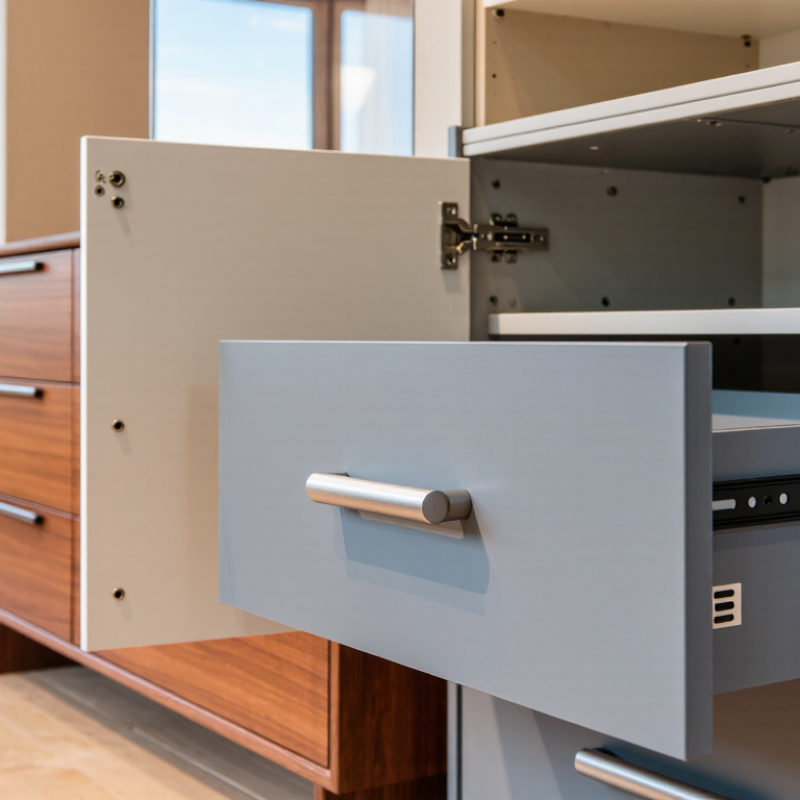
Hinges support cabinet doors and control how they swing. Drawer slides guide drawers, while catches and latches keep doors closed. Screws, bolts, dowels, brackets, and corner plates join panels or reinforce load-bearing areas. Beds may use rails, slats, hooks, and center supports. Tables and storage units can also include leveling feet or casters, depending on where they will be used. Often hidden.
These parts affect daily use, not just appearance. A drawer carrying cookware needs slides suited to its weight and travel distance. A tall cabinet may need strong connectors and careful leveling to reduce wobble. Materials and finishes matter too, especially near moisture or frequent handling. Hardware descriptions can vary between suppliers, so check dimensions and installation requirements rather than relying on labels alone. It is easy to overlook small fittings until a door sags or a screw loosens. The furniture’s design and assembly also affect which replacement part will fit.
Why Is Furniture Hardware Important for Your Business? - What Furniture Hardware Includes
| Hardware Category | What It Includes | Primary Function | Common Furniture Applications | Why It Matters to a Business |
|---|---|---|---|---|
| Hinges | Butt, concealed, pivot, and continuous hinges | Connect a door or lid to a furniture frame and allow it to open and close. | Cabinets, wardrobes, cupboards, chests, and storage benches | Suitable hinges help doors operate smoothly, align correctly, and withstand repeated use. |
| Drawer slides | Side-mount, undermount, and center-mount slide mechanisms | Guide drawers as they open and close; some types provide full extension or soft closing. | Dressers, desks, kitchen cabinets, and office storage | Slide choice affects drawer access, operating feel, installation requirements, and service life. |
| Handles and pulls | Bar pulls, cup pulls, recessed pulls, and bail pulls | Provide a grip for opening doors and drawers. | Cabinets, wardrobes, desks, and chests of drawers | They influence ease of use and appearance, and their hole spacing must match the furniture design. |
| Knobs | Single-point knobs made from materials such as metal, wood, glass, or ceramic | Offer a compact grip for opening doors and drawers. | Cabinet doors, small drawers, and bedside furniture | Knobs can support a consistent design while keeping installation simple with a single fixing point. |
| Fasteners and connectors | Screws, bolts, dowels, confirmat screws, brackets, and knock-down fittings | Join furniture components and secure hardware to panels or frames. | Flat-pack furniture, case goods, shelving, and upholstered frames | Correct fasteners support assembly, joint strength, repair, and efficient production. |
| Shelf supports | Shelf pins, brackets, and adjustable support fittings | Hold fixed or adjustable shelves in position. | Bookcases, cabinets, wardrobes, and display units | Reliable supports help shelves remain stable and allow storage layouts to be adjusted where needed. |
| Leveling feet and glides | Adjustable feet, floor glides, and protective pads | Help stabilize furniture and reduce direct contact with the floor. | Tables, cabinets, desks, chairs, and storage units | They can help compensate for uneven floors and reduce scratches or wear on floor surfaces. |
| Casters | Swivel, fixed, and locking wheels | Allow furniture to roll; locking versions can help keep it in place. | Office chairs, mobile cabinets, carts, and movable storage | Choosing suitable casters affects mobility, stability, floor compatibility, and ease of repositioning. |
| Locks and latches | Cam locks, cabinet locks, catches, and magnetic latches | Secure doors or drawers, or keep them closed during use. | Filing cabinets, desks, display cases, and storage furniture | They can provide controlled access or help prevent doors from opening unintentionally. |
FAQS
It includes hinges, drawer slides, knobs, screws, brackets, and other parts. Some pieces stay hidden.
They guide drawer movement and must support its expected load. A cookware drawer needs suitable slides to avoid binding.
Hinges keep doors aligned through repeated opening. Loose fittings can make a door sag or scrape.
Strong connectors, careful leveling, and secure wall attachment can improve stability. The cabinet’s design matters too.
Compare dimensions, mounting points, and installation requirements. Supplier labels alone may not tell the whole story.
No. Performance under ordinary use matters more than appearance. A polished part can still fail.
Incorrect fasteners or loose connections may damage surrounding material. A screw can loosen quietly.
Check for wear and looseness regularly, especially around moving parts. The right interval depends on use, and that part is easy to misjudge.
Conclusion
Furniture Hardware includes the hinges, slides, handles, fasteners, brackets, and other components that allow furniture to function as intended. Though often small and overlooked, these parts affect how smoothly doors and drawers move, how securely furniture is assembled, and how safely it performs during everyday use. Reliable hardware can help prevent loosened connections, uneven movement, and premature wear, supporting consistent product quality over time.
For a business, hardware choices also influence manufacturing costs, maintenance needs, and the customer’s experience. Components that are easy to install and operate can improve efficiency and satisfaction, while poor-quality choices may lead to repairs or complaints. When selecting Furniture Hardware, businesses should consider the furniture’s purpose, expected frequency of use, load requirements, material compatibility, appearance, durability, and budget. Matching each component to the product helps balance performance, cost, and long-term value.